A Spring Sort for Scraps of Paper Worth Saving
A spring sort for scraps of paper worth saving turns loose offcuts into ready-to-use materials, with clear destinations for paper you cannot reuse.
The common mistake in a spring sort for scraps of paper worth saving is keeping every piece that looks as though it might be useful. The cost is practical: when glue, paint or a parcel needs a scrap, the good pieces are buried in a jumble. Sort for the next job each material can do, and make those supplies easy to grab.
Start with the reuse job, not the paper pile
Choose one container, such as the paper bag under your desk or the drawer where gift wrap ends up. Before lifting anything out, name the jobs you actually have: covering a work surface, wrapping a small parcel, making a label, or cutting shapes for a project already under way. This keeps the sort focused on materials that can go straight back to work.
Set out a table, a recycling container, a rubbish bin and a few envelopes or shallow trays. Keep scissors nearby only if you already have a use for cutting. Check your local recycling guidance for coated, laminated or foil-backed paper; if a piece is unsuitable for that collection, consider another sensible use or disposal route.
Keep papers with personal information or useful details separate from craft materials. Put an address, reminder or note somewhere safe before deciding what to do with its paper. Follow local guidance for disposal of private information.
Work in handfuls, leaving most of the contents in their original container until you have room to see what remains. That makes it easier to distinguish workable pieces from the loose ends that do not serve a current task.
Sort paper scraps by the job they can do now
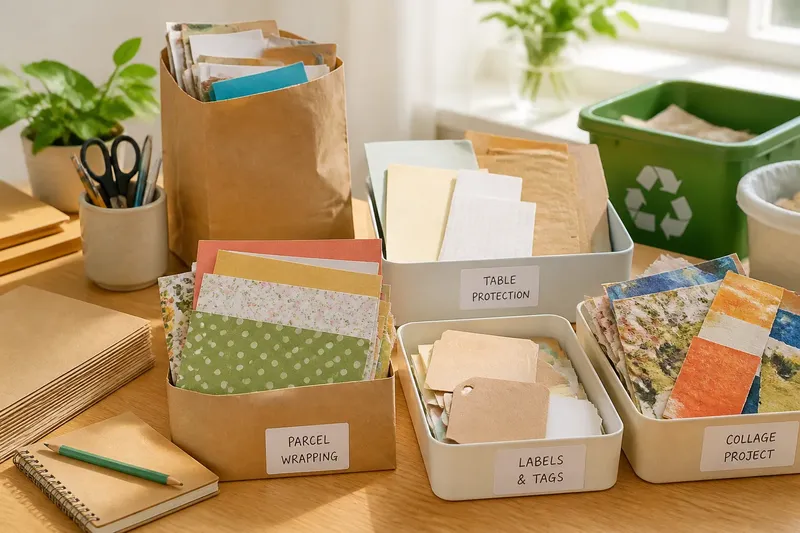
Make temporary groups around practical reuse, rather than broad creative possibilities. Useful groups might include:
- Table protection: clean, plain sheets that can catch glue or paint.
- Parcel wrapping: flat, neat wrapping-paper pieces and paper bags that suit a small parcel.
- Labels and tags: card or sturdy paper with enough clear space to write on.
- Collage for a current project: colours, images or textures that suit work you are making now.
- Reusable notes: blank backs or clean offcuts that are convenient for a quick list or sketch.
Put a piece with the job you expect to use it for first. If an offcut seems suitable for several things, choose one home instead of spreading a handful across different containers. Keep useful information apart from material for making, so a note that still needs action does not vanish into the craft pile.
Use the groups to prepare ready-to-use supplies. If wrapping a parcel needs a sheet cut to size, trim only the pieces you know will fit that task; if you use scraps to protect a surface, keep them flat and together. The aim is to remove a small obstacle from the next job, not to turn every scrap into a project of its own.
Choose what to keep by its condition and next use
Check each group for cleanliness, workable shape and a recognisable job. A creased sheet may still protect a table, while a torn illustration may suit a collage in progress. Sticky, mouldy, badly stained or brittle paper is unlikely to be pleasant to handle, so do not keep it just because it is technically paper.
Also check whether you already have easier material for the same task. If a stack of near-identical bags is more than you would comfortably use, keep the most practical ones and send the rest to an appropriate destination. Reuse works best when the material is ready for a real job, rather than waiting for a vague future idea.
Say you find three patterned wrapping-paper offcuts, two narrow strips and a crumpled sheet in the desk drawer. You plan to wrap a small book and have no collage project under way. You check that one offcut is broad and neat enough for the book, then place it with parcel supplies; the strips go with labels only if they provide a useful writing surface, and the crumpled sheet is recycled if local rules accept it. The resulting choice is one ready wrapping piece, with no extra bundle kept solely for an imagined project.
If a piece has no suitable job, do not invent a category for it. Send it to the appropriate recycling, rubbish or other reuse route, using local guidance where needed.
Make each saved piece easy to use
Keep frequently used scraps in an open folder, shallow tray or section of a drawer near the job. Put wrapping pieces near the place you prepare parcels; keep table-protection paper by the spot where you craft. A location that matches the task saves searching.
Use simple labels such as “parcel wrapping” or “table protection”. A clear envelope lets you see its contents; a paper band can hold flat sheets without concealing them. Do not create a separate container for every small category if one envelope inside a larger folder will do.
Leave enough room to pull out a piece without catching or tearing the others. Store paper flat where possible, away from damp and direct sunlight. If the container becomes awkward to browse, remove the pieces least suited to the jobs you actually do.
Keep the prepared supplies close to their next use, not merely together in a tidy box.
What should you do with awkward paper scraps?
Can I reuse paper with writing on it?
Use a written-on piece only if the information is no longer needed and the remaining blank area suits a practical job such as a rough sketch or table covering. Keep private or useful details out of craft materials and follow local guidance for disposing of them.
Should I cut large sheets into smaller pieces?
Cut a sheet when you know the size or shape will suit a task, such as making tags for a parcel. Otherwise, keep it flat with wrapping materials or recycle it if it is not useful; cutting without a purpose can create more scraps to sort.
What can I do with paper that local recycling will not accept?
Check your council or collection service’s guidance, since acceptance varies by area and material. If it is clean and suitable, consider a practical use such as packing or protecting a surface; if not, use the disposal route advised locally.
How do I stop reusable scraps becoming clutter again?
When new paper enters the container, put it with a job straight away and remove anything it makes redundant. If the contents become difficult to browse, pause adding more until the useful pieces are clear and accessible.
Finish by leaving the next job ready
Return the kept materials to their task areas, put recycling and rubbish in their proper places, and return unrelated items to their homes. Leave the table clear enough for its usual work. There is no need to reorganise every paper supply in the house.
Notice what you prepared: perhaps a few sheets ready to cover a work surface, or wrapping offcuts that can fit a small parcel. That observation can guide your next choice when paper arrives. In a spring sort for scraps of paper worth saving, the best-kept piece is one already matched to a useful job and placed where that job happens.